

What To Know: Edmonds 5-stage Water Conservation
 Machenzie Glass
Edmond City Manager, AJ Krieger, and Edmond Water City Officials have announced an emergency escalation through the five-step water conservation plan on August 18, after record-high heat and statewide droughts have caused an additional 13 Million Gallons of outdoor water usage per day.
Since 2013, Edmond has participated in a mandatory regional water conservation plan with Oklahoma City, along with customer cities like Norman, Moore, Piedmont, El Reno, Yukon, Mustang, Blanchard, and the Deer Creek water district. This conservation plan introduced five increasing stages in order to reduce outdoor water usage.
What Edmond citizens should expect as Water Conservation stages continue:
According to Jennifer Thornton, Edmond’s Communications and Tourism Director, the city is currently in Stage 2 of the regional Water Conservation Plan due to demand exceeding 22 Million Gallons per Day (MGD) versus a typical 9–13 MGD in lower-use periods. Thornton says this is driven by heat, low rain, and the need to protect reserves and firefighting pressure.
Stage 2 rules (replacing year-round odd/even watering):
Now in stage two, residents are instructed to maintain a twice-weekly watering schedule.
- Single-family homes: Even-ending addresses water Sunday/Thursday; odd-ending addresses water Saturday/Wednesday.
- All other (multi-family, commercial, etc.): Tuesday/Friday.
If stages escalate (based on demand, forecasts, and system levels):
- Stage 3: Further restriction to one day per week (address-based).
- Stage 4: Hand-watering of gardens/flower beds only; commercial car washes limited to those with recycling.
- Stage 5: Ban on nearly all outdoor watering and vehicle washing.
Thornton says to expect continued monitoring and possible further restrictions if the heat and dry weather persists. She says the city is focusing on the outreach and education of water conservation, with an emphasis on indoor efficiency and drought-tolerant landscaping, rather than immediate heavy fines.
The city is also investing in long-term supply (treatment plant expansion) while relying on customer conservation.
As of mid-August 2026, about 93% of Oklahoma is in drought, with roughly 1.4 million residents in drought areas. Thornton mentions that Western Oklahoma (including the Panhandle) is hit hardest due to lower and inconsistent rainfall, reliance on groundwater, and longer-lasting dry conditions.
The groups most affected by the droughts include:
- Farmers and ranchers — Agricultural communities in western and southwestern counties feel this most acutely.
- Rural and small-town residents — Facing water rationing, low tower levels, and system strain. Western Oklahoma’s municipal and agricultural water supplies are under greater pressure than the east.
Thornton says that urban areas also feel this strain through higher water demand and restrictions. She refers to the typical non-irrigation demand is 9 Million Gallons per Day (MGD), with current demand exceeding 22 MGD. That’s an outdoor water usage of 13 MGD, more than doubling the winter months average.
Reasons for the extreme heat:
Thornton says that current extreme heat in Oklahoma is driven by persistent high-pressure systems combined with low rainfall, high evaporation, and elevated baseline temperatures. Urban areas with more pavement and less tree cover make some neighborhoods significantly hotter.
Mitigation approaches:
- Lifestyle/individual: Reduce outdoor water use (especially lawns), lower peak electricity demand (efficient AC, avoid unnecessary daytime cooling loads), plant drought-tolerant landscaping, and support conservation programs.
- Community/city actions: Expand tree canopy and green space to reduce urban heat islands, enforce water conservation, maintain adequate system pressure for firefighting, and invest in infrastructure (as Edmond is doing with plant expansions).
Heat and drought are linked: higher temperatures increase evaporation and water demand, worsening drought impacts.
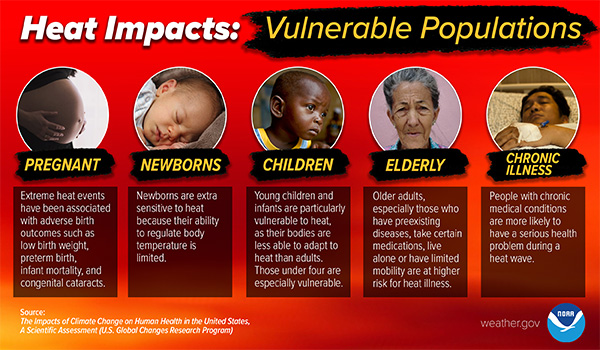
How citizens can stay safe in the heat:
Key practical steps (drawn from Oklahoma emergency management, EMSA, Red Cross, and health guidance):
- Stay hydrated — drink water regularly (even if not thirsty); aim for frequent small amounts. Avoid or limit caffeine, alcohol, and sugary drinks.
- Limit outdoor activity to early morning or evening; take frequent breaks in shade or air conditioning.
- Wear lightweight, loose-fitting, light-colored clothing and a wide-brimmed hat; use sunscreen.
- Never leave children, elderly people, or pets in parked vehicles (temperatures rise rapidly).
- Know the signs: Heat exhaustion (heavy sweating, dizziness, nausea, weakness, cool/clammy skin) → move to a cool place, loosen clothes, cool with wet cloths, sip water. Heat stroke (confusion, hot/dry skin, high body temperature, possible loss of consciousness) is a medical emergency — call 911 and cool the person aggressively.
- Check on neighbors, especially older adults, those living alone, or without AC.
- Protect pets with shade, water, and limited pavement time.
For more information about the watering schedule and conservation plan levels, residents can visit www.edmondwater.com and click on “What Water Stage Are We In” from the homepage. Water conservation tips are also available on the Conservation University website.
Whether you live in an apartment or on a large acreage, there are ways we can all save water. Explore options on the Edmond website by navigating to Water Resources and clicking on Conservation University. You will find study guides, classes, the current water conservation stage, and a drought-tolerant plant database to help reduce water use outdoors.
Residents may also monitor indoor water usage by logging into Smart Choice and viewing the data available on their water usage.